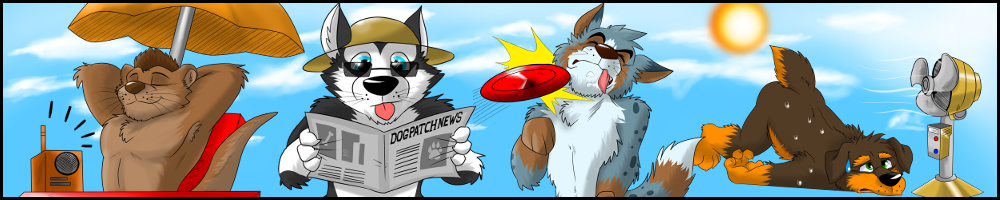

How furries resist a commercialized fandom (Part 1)
by Patch O'Furr
Furry fandom often has DIY ethics (intentional or not). That can mean nonprofit volunteer-led events, and directly supporting each other’s art instead of just consuming corporate products. A Daily Beast reporter asked about it and I shared lots of info that didn’t all make the news — so here’s a followup in 3 parts.
News site @thedailybeast covers the "designer fursuit" twitter blowup. The reporter got in touch and I talked her ear off about DIY ethic and hoped it would focus on what #furries love more than what's controversial, but she put good info in. @AlbinoTopaz https://t.co/0GT537OmsI
— Dogpatch Press (@DogpatchPress) May 4, 2019
Why is commercialism a topic for an often disparaged subculture? Compare furry fandom today to its roots. Times change, and hindsight can help to see why. Let’s look at how industry and media influenced the American roots in the 1970’s, how it grew, and changes that come with bigger scale than ever.
The 1970’s could be a hungry time for fans with a taste for comics and animation of the 1940’s-50’s Golden Age. As it faded, funny-animal comics died off while the business suffered under the Comics Code. In movies, the fall of the studio system contributed to a dark age of animation. Hanna-Barbera reigned on TV with cheap formulaic product. Disney’s feature studio almost went bankrupt with barely any new artists hired for a generation. Robin Hood (1973) spread the furry virus before it had a name, but the movie wasn’t well loved by the studio. Then a new wave of artists (such as Tim Burton and Don Bluth) came out of Disney while it had a rebirth, peaking with The Lion King (1994), which launched a thousand furry projects. But by the early 90’s the furry fandom was already fully fledged to take off on its own. It happened under the influence of the ups and downs of industry, but also in spite of it.

 Oswald the Lucky Rabbit: The Search for the Lost Disney Cartoons, by David A. Bossert. Introduction by J. B. Kaufman. Illustrated.
 2016 FURRY OSCARS
 The Art of Moana, by Jessica Julius and Maggie Malone. Preface by John Lasseter. Foreword by Ron Clements and John Musker.
 attend Mascot Boot Camp
 It’s interesting to look at how anthropomophism, character and sexuality came together in simple friendship stories. You don’t need to know about the author for the stories to be just as good, but the writing is very personal. These are mainstream children’s books, but I might dare to say that the hidden meaning gives them more in common with furry fan fic than anyone but us would understand.